Commercial CCTV vs Security Guards: When Do You Need Technology, People or Both?
When you're looking at security for your business, one of the first questions is often whether you need
commercial CCTV, security guards, or a combination of the two.
There isn't a single answer that works for every site.
A warehouse with a large perimeter has very different security challenges from an office building,
retail site, or data centre.
Even two similar businesses can need completely different levels of protection depending on their location, opening hours, access points, assets, and risks.
The important thing is understanding what you need security to actually do.
Do you need eyes across a large site? Someone there to respond when something happens? Better control over who can enter certain areas? Or several of those things at once?
Here's how to work out where technology, people, or a combination of both can fit into your security strategy.
What's the difference between commercial CCTV and security guards?
Commercial CCTV and security officers can both form part of a physical security strategy, but they serve different purposes.
What can commercial CCTV do?
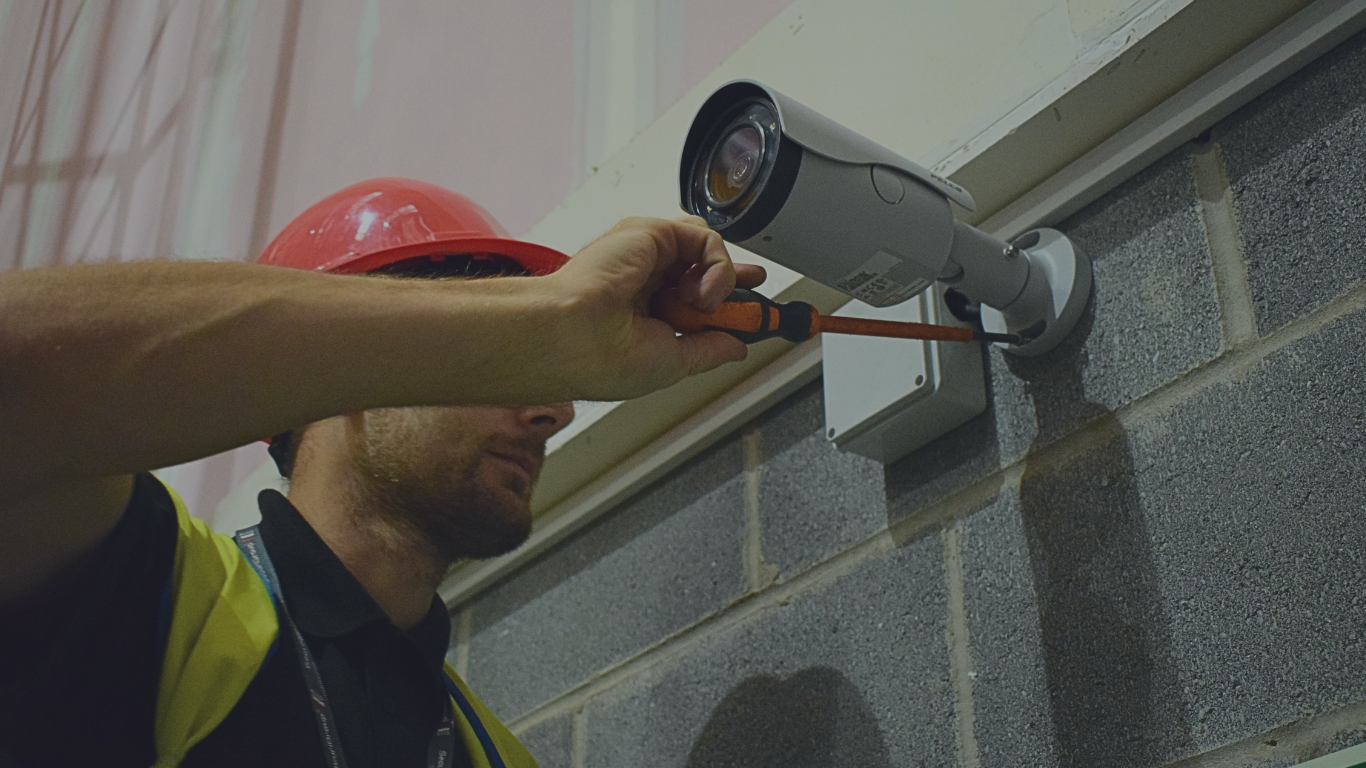
A commercial CCTV system uses cameras positioned around a business or site to provide visual coverage of the areas you need to protect.
Depending on the system and the way it's set up, CCTV can help you:
- Monitor entrances, exits and key area
- Oversee large or difficult-to-cover spaces
- Record activity for later review
- Investigate incidents
- Provide greater visibility when a site is quiet or unoccupied
- Support the people managing security on site
For larger businesses, CCTV may also form part of a wider
integrated security system, alongside technology such as
access control and other electronic security measures.
The type of system you need will depend on the site itself, including the areas you want to monitor and the risks you're trying to manage.
What do security guards provide?
Security officers give you something technology can't provide on its own: a person who can assess what's happening and take appropriate action on site.
On site, their role can include:
- Providing a visible security presence
- Monitoring people entering and leaving
- Carrying out patrols
- Responding to incidents
- Supporting access procedures
- Reacting when suspicious activity is identified
- Dealing with unexpected situations
- Providing reassurance to employees, visitors or customers
Having people on site also brings human judgement into your security approach. An officer can assess what they're seeing, understand the situation, and respond accordingly.
Can CCTV replace security guards?
Sometimes technology can reduce the amount of physical guarding a site needs, but CCTV won't always be a direct replacement for security officers.
It depends on what needs to happen across your site.
For example, CCTV can provide much wider visibility across a large perimeter or remote area without requiring an officer to continually patrol or monitor that location.
If something happens that requires an immediate physical response, however, you'll still need someone available to act.
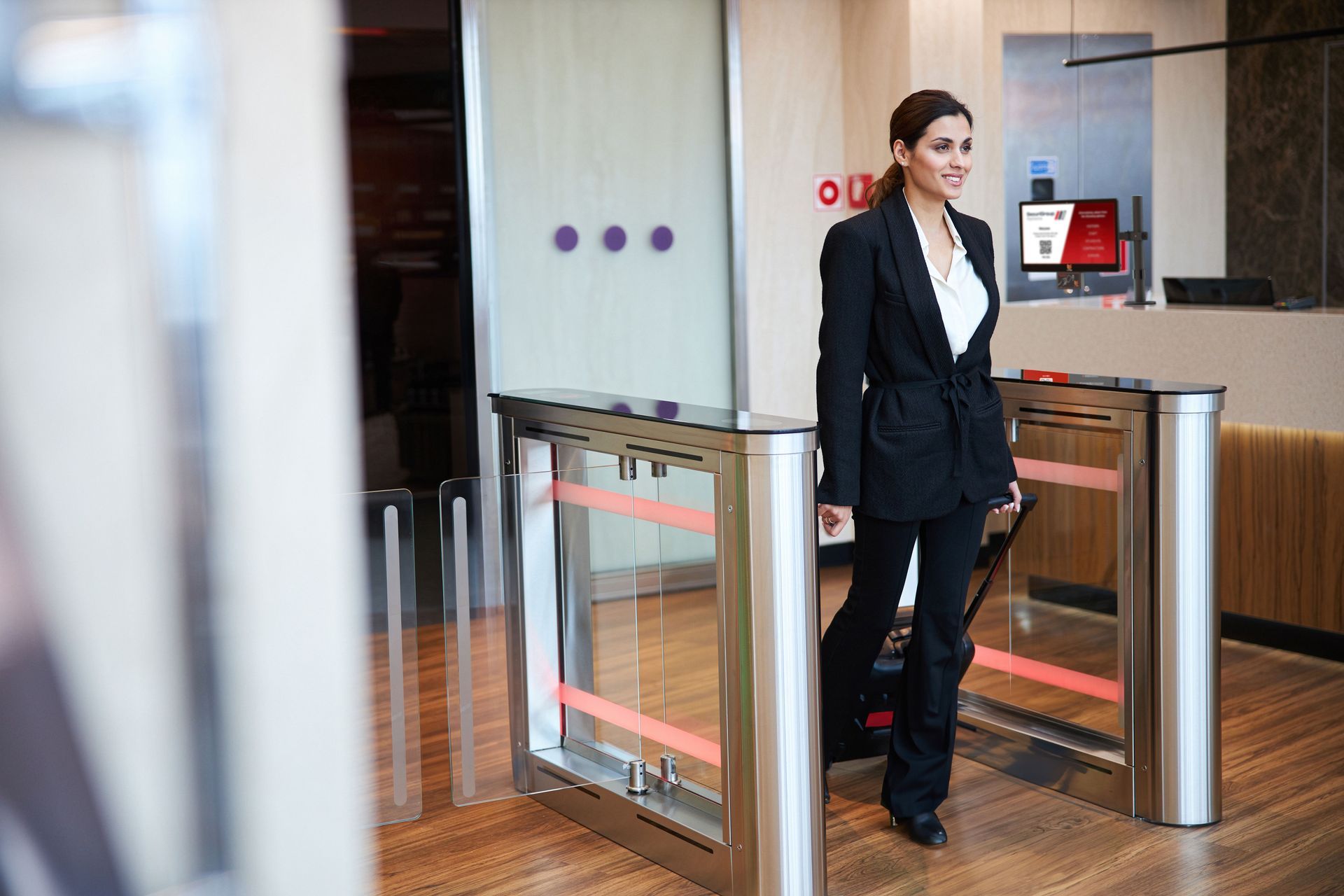
Similarly, CCTV can show you what's happening around an entrance or restricted area, while access control can help manage who is able to enter.
When does commercial CCTV make sense?
CCTV is particularly useful where visibility, coverage, and recording are important. You may benefit from a commercial CCTV system if:
You have a large site to monitor
Warehouses, industrial sites, business parks, logistics facilities and other large premises can have extensive perimeters and areas that aren't practical for people to watch continuously.
Strategically positioned cameras can give your security team much broader visibility.
Your premises are empty for long periods
If your site is unattended overnight, at weekends or during shutdown periods, CCTV can help maintain visibility when fewer people are around.
You need a record of incidents
Recorded CCTV footage can be valuable when you need to establish what happened before, during or after an incident.
You have blind spots or hard-to-monitor areas
Loading areas, car parks, perimeter spaces, remote entrances and other less visible parts of a site can create gaps in security.
A good CCTV design should focus on those actual risks rather than simply installing as many cameras as possible.
When do you need security guards?
Technology can cover a lot of ground, but there are situations where having people on site remains important.
When you need an immediate response
Seeing an incident isn't the same as being able to respond to it.
If the risks on your site require someone to investigate or deal with situations as they happen, an on-site security presence may be appropriate.
When situations need human judgement
Busy offices, public buildings and other occupied sites can involve situations that aren't always straightforward.
People can interpret behaviour and make decisions based on what's actually happening rather than relying solely on an alert or image.
When a visible security presence matters
Sometimes the officer's presence itself is an important part of the security approach, particularly at entrances or prominent areas of a site.
When your site has complex security requirements
Some businesses have multiple buildings, entrances, restricted areas or different groups of employees, contractors and visitors moving through the site.
In those environments, physical security can involve much more than simply watching for an intruder.
When should you combine CCTV and security guards?
For many commercial sites, people and technology work best when they're designed to support each other.
CCTV can increase visibility across the site, including areas that aren't practical for an officer to monitor continuously. Security officers can then provide the physical presence and response required when something needs attention.
Access control can add another layer by helping manage entry into particular buildings or restricted areas.
When these different elements are considered together, it becomes possible to build security around the way your site actually operates.
What does an integrated security approach look like in practice?
We’ve seen first-hand how bringing people and technology together can improve security across a large, complex site.
At
Hillington Park,
SecuriGroup was already providing security guarding and electronic systems maintenance when a change to the existing security control room created an opportunity to rethink the security model.
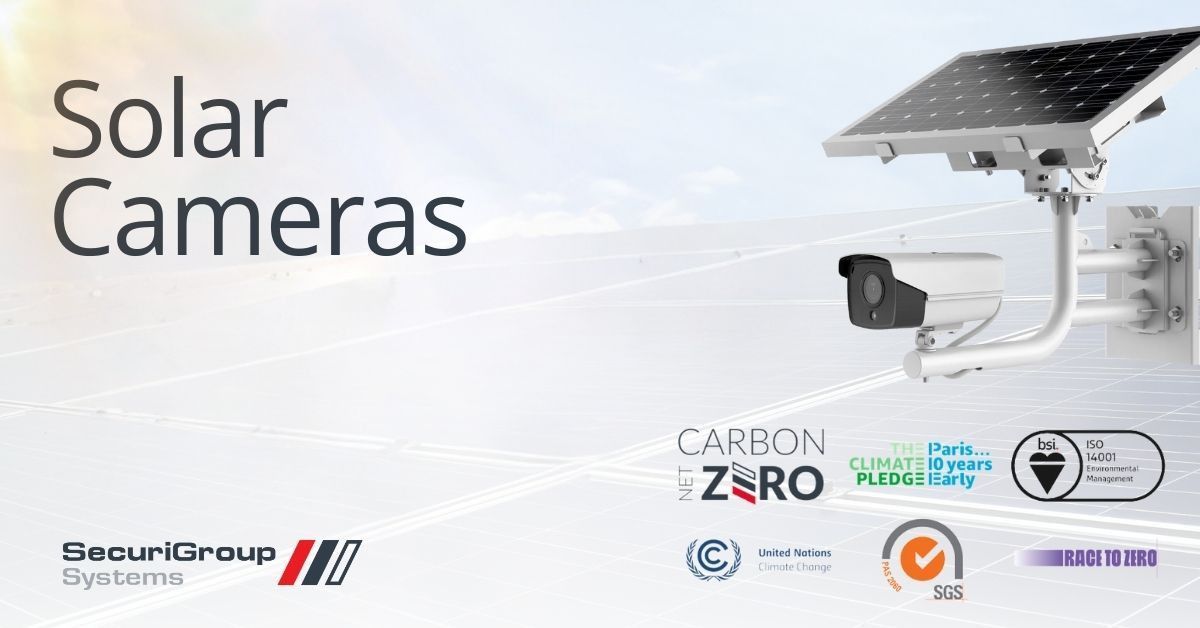
The new approach combined security officers on site with a wireless IP CCTV network, including more than 160 new camera positions and solar-powered PTZ cameras in remote locations.
Across the 2.3 million sq ft business park, the new setup improved coverage and visibility while reducing reliance on traditional guarding, saving 220 guarding hours and £200,000 annually.
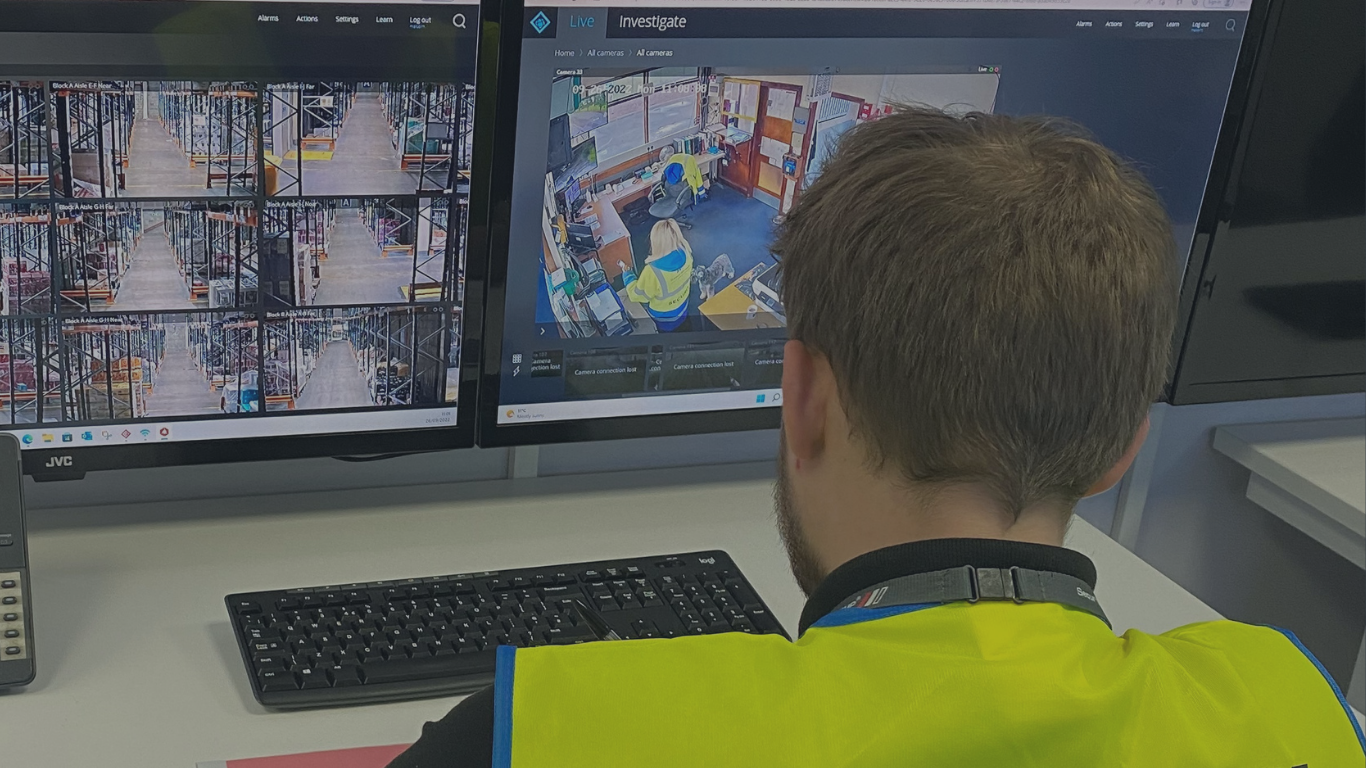
With CCTV covering more of the business park, officers could remain focused on the areas and situations where their physical presence and response were needed.
CCTV vs security guards: a quick comparison
| If you need to... | Consider |
|---|---|
| Monitor several areas at once | Commercial CCTV |
| Maintain visual coverage of a large site | Commercial CCTV |
| Record activity for investigation | Commercial CCTV |
| Have someone physically respond on site | Security officers |
| Assess situations that require human judgement | Security officers |
| Maintain a visible security presence | Security officers |
| Control who has access to particular areas | Access control |
| Combine monitoring, access and response | Integrated security |
| Improve coverage while making better use of guarding resource | CCTV + security officers |
Most sites won't fit neatly into one column. Your requirements may include several of these, particularly if you manage a large or complex commercial environment.
How do you decide what your business needs?
Before investing in new cameras or changing your guarding provision, it helps to look at your site as a whole. Ask:
What are you protecting?
This could include:
- People
- Buildings
- Equipment
- Stock
- Vehicles
- Restricted areas
- High-value assets
Where are your biggest vulnerabilities?
Look at entrances, exits, perimeters, loading bays, car parks, isolated areas and anywhere with limited visibility.
When are you most exposed?
Your security requirements at 2pm might be very different from those at 2am.
Think about shift patterns, delivery periods, weekends, and times when the premises are empty or lightly staffed.
What happens when something goes wrong?
If an alarm or CCTV camera identifies something unusual, who needs to know and what needs to happen next?
Identifying an incident is only part of the response. You also need to know what happens next.
Are your existing systems working together?
If your CCTV, access control and other security technology operate independently, it may be worth looking at whether a more integrated approach would give you better oversight of your site.
Read more:
Why Connected Security Delivers Better Visibility Across Sites
Is CCTV cheaper than security guards?
The costs of CCTV and security guarding work differently, so comparing them isn't always straightforward.
- A commercial CCTV system usually involves an initial investment in equipment and installation, alongside ongoing costs such as maintenance and monitoring.
- Security guarding is an
ongoing people-based service.
For some sites, CCTV can provide effective coverage across areas that don't need a permanent physical presence. In other areas, having someone available to respond in person may still be essential.
Ultimately, cost is one part of the decision alongside the coverage, monitoring and response your site needs.
Do I need monitored CCTV?
Installing CCTV and actively monitoring CCTV aren't the same thing.
If your main requirement is to have recorded footage available after an incident, your needs will be different from a business that wants activity to be identified as it happens.
If you're considering CCTV monitoring, think about:
- When the site needs monitoring
- What areas matter most
- What should happen if suspicious activity is identified
- Who needs to respond
- Whether an on-site response is required
Your answers will help determine whether recorded CCTV is enough for your site or whether active monitoring and a defined response are also needed.
Should CCTV and access control work together?
For many commercial environments, CCTV and access control systems can work together as part of the wider security setup.
Access control helps manage who can enter particular buildings or areas, while CCTV provides visual coverage of what's happening around them. Your security team can then step in when something needs to be checked or responded to.
Bringing these technologies together through security systems integration can provide better oversight across the site, particularly where you're managing multiple entrances, buildings or restricted areas.
Read more:
How to Choose the Right Access Control System for Your Site
So, do you need technology, people or both?
There isn't a set answer for every business.
- If your main priority is improving visibility across large, remote or difficult-to-monitor areas, commercial CCTV may meet much of that requirement.
- If you need an on-site presence that can assess and respond to situations in person, security officers may continue to play an important role.
- For sites with several risks, buildings or security requirements, a
combination of people and technology may provide better overall coverage.
Looking at the site as a whole can help you understand where each element fits and build a security approach around the risks you actually face.
Find the right security setup for your site
Finding the right balance starts with understanding what your site needs from its security.
SecuriGroup Systems can help you review your existing setup, identify where technology could improve coverage and explore how CCTV, access control and wider integrated security systems could work together across your site.
Talk to SecuriGroup Systems about the right security technology for your site.