Is Your Commercial CCTV System Outdated? 7 Signs It’s Time for an Upgrade
Just because your
CCTV system is working doesn’t mean it’s still doing everything you need it to.
Your cameras might still record footage. The control room might still receive images. You may not have experienced a major fault. But the system you originally installed may no longer reflect how your site operates today.
Commercial sites change. Buildings expand, entrances move, operating hours change and new risks emerge. At the same time, CCTV technology has developed significantly.
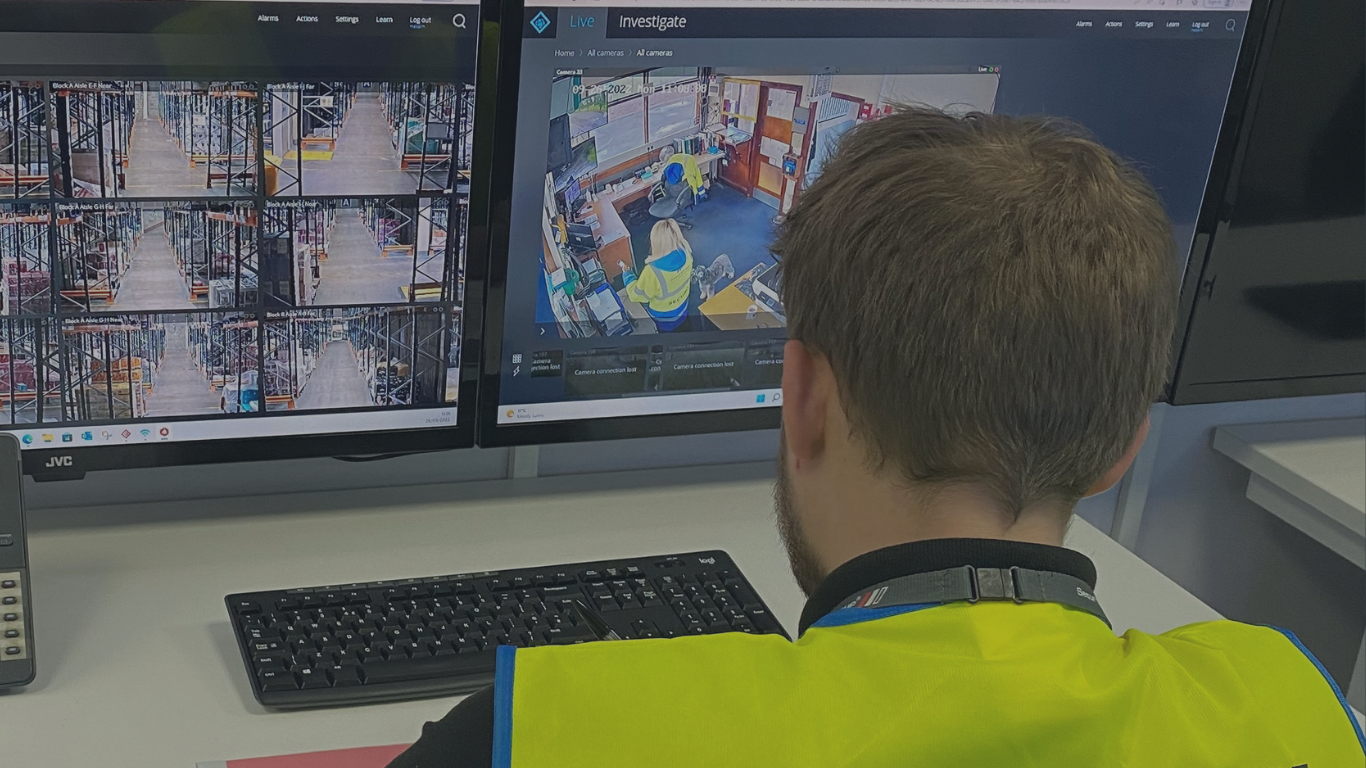
Modern systems can provide much more than recorded footage. CCTV can form part of a wider security setup alongside access control, monitoring and other technologies, giving security teams better oversight of what's happening across a site.
So, how do you know when your existing CCTV has reached the point where it needs attention?
Here are seven signs worth looking for.
1. Your footage isn't clear enough when you actually need it
It's easy to assume your CCTV is doing its job when you're looking at a live image on a screen.
The real test often comes after an incident.
Can you clearly see the person, vehicle or activity you need to review? Can you follow movement between different areas? Does the image remain useful in poor lighting or challenging weather conditions?
Older cameras, unsuitable positioning or systems with limited image quality can leave you with footage that doesn't give you enough detail when investigating an incident.
If you're regularly zooming into footage only to find that the detail you need isn't there,
it's worth reviewing whether your cameras are still suitable for the areas they're protecting.
That doesn't automatically mean replacing every camera. Start by looking at where image quality is falling short and whether the problem is the camera itself, its positioning, lighting, configuration or the wider system.
2. You have gaps in your CCTV coverage
Your CCTV may have been designed around your site several years ago.
Is the site still being used in the same way?
New buildings, extensions, storage areas, loading bays, car parks or access points can change where your vulnerabilities are. Even relatively small operational changes can create areas that weren't considered when cameras were originally installed.
Walk through the site and look specifically at:
- Entrances and exits
- Perimeter areas
- Car parks
- Loading bays
- Delivery areas
- Storage areas
- Isolated or less frequently occupied spaces
- Routes between buildings
A well-designed CCTV system should reflect the risks and layout of the site you operate today.
Check that your cameras still cover the areas that matter most, especially entrances, access points and higher-risk parts of the site.
3. Finding footage takes too long
When something happens,
how quickly can your team find the relevant footage?
If reviewing an incident means manually searching through hours of footage, switching between different recorders or working across several systems, finding what you need can take far too long.
This becomes even more difficult across larger or multi-site environments.
Newer CCTV systems can offer more effective ways to search and manage footage, while intelligent video analytics can help teams identify relevant activity more efficiently.
Think about a typical incident on your site.
If your security team needed to establish when a vehicle arrived, follow someone's movement through a building or investigate activity outside normal operating hours, how straightforward would that process be?
If the answer involves several systems and a lot of manual searching,
it may be time to look at whether your current system is making incident reviews harder than they need to be.
4. Your CCTV operates separately from the rest of your security
CCTV becomes more useful when the information it provides doesn't sit in isolation.
For example, an
access control system might record a denied entry attempt while a camera captures what happened at the same location. If those systems operate completely separately, somebody has to manually piece that information together.
Integration can make that process much easier.
CCTV can form part of a wider security environment alongside technologies such as:
- Access control
- Intruder detection
- ANPR
- Visitor management
- Remote monitoring
Connecting CCTV and access control, for example, can help security teams review an access event alongside the corresponding footage and establish what happened more quickly.
If your existing CCTV can’t integrate effectively with other technology, it may be restricting what you can achieve across the wider site.
Read more:
Integrated Security Systems: Why Connected Security Delivers Better Visibility Across Sites
5. You're spending too much time dealing with faults and maintenance
An ageing CCTV system can become increasingly expensive to maintain.
Individual cameras fail. Recorders develop faults. Replacement parts become harder to source. Different generations of equipment accumulate as repairs and additions are made over time.
Eventually,
maintaining the existing system can become more complicated than addressing the underlying problem.
Look at your maintenance history.
Are the same faults appearing repeatedly? Are individual cameras becoming unreliable? Is equipment approaching obsolescence? Are you maintaining several different types of CCTV technology across the same estate?
For multi-site businesses, inconsistency can create an additional problem. Different sites may have different equipment, platforms and standards, making the overall estate harder to manage.
A CCTV review can help you understand whether continued maintenance makes commercial sense or whether a phased upgrade would offer better long-term value.
6. You can't easily manage or monitor CCTV across multiple sites
Managing CCTV at one location is very different from managing it across a national estate.
If each location has its own standalone system, gaining a consistent view of what's happening can become difficult. Your teams may have to log into different platforms, follow different processes or physically visit sites to access certain information.
For businesses with multiple locations, an upgrade can also make CCTV easier to manage consistently across every site.
SecuriGroup Systems supported
a national client with the modernisation of CCTV
across 23 UK sites. Following a review of the existing technology, the team developed a standard that could be rolled out across the full portfolio, with
more than 1,350 intelligent IP cameras installed.
This gave the client a more consistent system across its sites, while introducing centralised management, cloud monitoring and video analytics.
7. Your CCTV no longer matches the risks you're trying to manage
Security technology should be based on what you're trying to protect and the risks your business actually faces.
A CCTV system installed years ago may still provide coverage,
but your security requirements could have moved on.
Perhaps you're experiencing more out-of-hours activity. Maybe high-value stock has moved to another part of the site. You might have more contractors entering the premises, additional vehicle movements or new areas requiring tighter access.
Your approach to security may also have changed.
For larger
commercial environments, CCTV can now support remote monitoring, analytics and a more integrated security model, allowing technology and security personnel to work together more effectively.
Your existing system may not have been designed with any of those requirements in mind.
If you’re considering CCTV alongside on-site security, our guide to
commercial CCTV vs security guards explains when each can be useful and when a combination of both might work best.
Does an outdated CCTV system always need to be completely replaced?
A CCTV upgrade
doesn't always mean removing everything and starting again.
Depending on your existing infrastructure, some cameras, cabling, networks or other equipment may still be suitable for continued use.
In other cases, retaining ageing infrastructure can limit what a new system is capable of.
A review of your existing system can help identify what can be retained, what needs attention and where an upgrade would make the biggest difference.
Look at:
- The condition and capability of existing cameras
- Current and potential blind spots
- Network infrastructure
- Recording requirements
- Storage
- Monitoring arrangements
- Integration with access control and other systems
- Cybersecurity and system configuration
- Future expansion plans
- Maintenance requirements
The result might be a complete replacement, a phased upgrade or targeted improvements to specific parts of the system.
What can a modern commercial CCTV system offer?
The answer depends on the environment and what you need the technology to achieve.
For some businesses, the priority will be improved image quality and better coverage.
For others, the bigger opportunity might be remote monitoring, video analytics or connecting CCTV with other systems.
Modern CCTV can support:
- Improved visibility across large sites
- Monitoring of entrances, exits and key areas
- Incident investigation
- Coverage of remote or difficult-to-monitor locations
- Remote surveillance
- Analytics and automated detection
- Integration with access control and other security technology
The difference an upgrade can make will depend on the problems with your existing system.
At
Bradford College, the existing CCTV struggled with poor low-light performance and inadequate image quality. Following a full assessment of the estate,
SecuriGroup Systems introduced
DarkFighter CCTV technology, delivering four times the resolution of the previous cameras alongside improved low-light visibility and intelligent motion detection.
The improved coverage and monitoring also allowed the college to
reduce overnight guarding by 168 hours per week, contributing to
£445,000 in savings
over three years.
The upgrade addressed specific problems with the college's existing CCTV and gave the security team clearer footage and better monitoring across the campus.
How often should you review your commercial CCTV system?
There isn't a single replacement cycle that will be right for every organisation.
Changes to your site, how it operates or the risks you're managing are all good reasons to review your CCTV.
That could include:
- An expansion or refurbishment
- New entrances or restricted areas
- Changes to operating hours
- An increase in incidents
- Changes to guarding provision
- Repeated CCTV faults
- Acquisition of additional sites
- Plans to introduce access control or other connected technology
It's also useful to
include CCTV within your regular security reviews.
This gives you the opportunity to identify gaps before they become an issue and assess whether your existing technology still supports your operational requirements.
Is it time to review your CCTV?
An outdated
CCTV system isn't defined by the date it was installed.
What matters is whether it's still giving you the visibility, reliability and control you need.
If footage isn't useful when an incident occurs, coverage no longer reflects your site, faults are becoming commonplace or your cameras can't work effectively with your other security technology, it may be time to take a closer look.
SecuriGroup Systems can review your existing CCTV setup and identify where upgrades, integration or changes to your current system could improve security across your site. From design and installation to ongoing maintenance and monitoring, we can support your CCTV throughout its lifecycle.
Get in touch to review your commercial CCTV system.